The Public Safety Group Blog


How EMS Instructors Can Effectively Teach Mental Health Topics
by  Public Safety Group     Mar 18, 2026
ems-mental-health

Few EMS calls are only physical in nature. Fear, stress, anxiety, and crisis frequently shape how patients communicate and respond to care. Despite the frequency of mental health in EMS calls, the topic has long been treated as an afterthought in EMS education. This disconnect means that EMS is often left to navigate complex behavioral health emergencies with limited preparation.  

To better understand how mental health is currently taught in EMS programs, where gaps remain, and why those gaps matter, the Public Safety Group sat down with EMS Product Manager Jameel Sylvia. Sylvia began his EMS career at 18, completing his EMT training while still in high school before advancing to Advanced EMT and later paramedic certification. After working with multiple EMS organizations, he found his true passion in EMS education, spending the past decade teaching at community colleges and private training institutions. 

In 2019, Sylvia completed his master’s thesis, The Need for Enhanced Training in Mental Health Emergencies for First Responders, which examined gaps in existing education and opportunities to better prepare clinicians for these calls.  

Mental Health is Part of Nearly Every Call

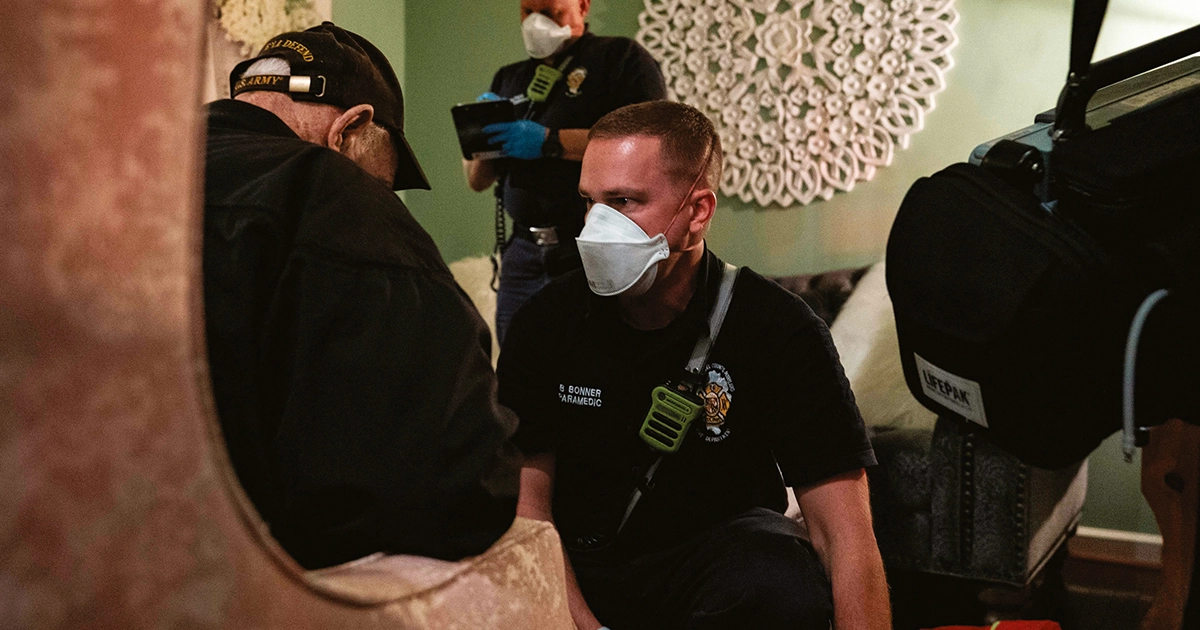
When people think of mental health–related EMS calls, they often picture suicidal ideation, panic attacks, or dementia-related emergencies. In reality, behavioral and emotional distress frequently shows up alongside routine medical issues. 

“You could be responding to a patient for chest pain,” Sylvia explains. “They may be having signs and symptoms of a heart attack, but they’re also anxious, overwhelmed, and emotionally distressed.” 

In these situations, the patient’s mental health concerns may not be the reason for the 911 call, but they still must be handled. Patients may be worried about who will care for a dependent spouse or how they’ll contact family members. That stress can intensify symptoms, complicate assessment, and shape how patients interact with EMS clinicians on scene.  

Sylvia says the challenge is that EMS education and on-scene priorities often focus almost exclusively on the primary clinical problem. Thus, the emotional experience of the patient becomes secondary, if not overlooked entirely. 

“We’re so focused on taking care of the chest pain or the broken leg that we forget they’re a human,” he notes. “They’re experiencing emotions, and they may be experiencing a mental health crisis right in front of us that we’re not really equipped to identify or handle.”  

Why is Mental Health So Difficult to Teach in EMS Classrooms?

With so many clinical topics to include in the classroom, today’s EMS educators often face difficulties making mental health part of the lesson plan. EMT programs may have as few as 160 hours to pack all relevant curriculum into, while paramedic programs are packed with high-priority clinical topics. Mental health becomes just a small part of the curriculum, even though, as Sylvia notes, it represents a significant portion of real-world calls. 

“Anecdotally, 70 to 80 percent of the calls we go on have some mental health component to them, even if it’s not the primary reason for the call,” he said. 

This disconnect raises an important question: why does mental health receive so little instructional time when it plays such a consistent role in patient care? 

In many EMS education programs, behavioral and mental health content is treated as a required checkbox rather than as a core clinical skill. It is common to see just a single chapter on behavioral emergencies in EMS textbooks. Sylvia says that how that chapter is taught varies widely and is often limited in scope. 

“In most programs, it’s either an asynchronous lecture where students read the chapter and take a quiz on their own, or a one- to two-hour in-person session going through PowerPoint slides,” he said. “And then we’re done.” Content also remains the same as students progress from EMT to AEMT and to paramedic programs.  

Compared to situations like complex medical cases, behavioral emergencies are often viewed by students as less exciting or less critical. “Most students want to be engaged in trauma care,” Sylvia notes. “When you talk about behavioral emergencies, it’s not the ‘exciting’ stuff to them.”  

Instructor preparedness is another challenge. While many EMS educators bring years of field experience, Sylvia says this doesn’t always mean they are confident teaching behavioral health. Many instructors struggle to go beyond surface-level instruction.

What Mental Health Education in EMS Should Cover

After earning his master’s degree, Sylvia led a UCLA research initiative as principal investigator to redesign how behavioral health is taught in initial EMS programs. The curriculum blends classroom instruction with hands-on learning, including eight hours of didactic content, a four-hour skills session, a clinical rotation at a psychiatric urgent care center, and a ride-along with a crisis co‑response team that pairs law enforcement with a mental health clinician. This structure allows instructors to teach behavioral emergencies as a core clinical skill rather than just a brief overview. 

“It’s not eight hours of standing in front of a classroom and pontificating,” he explains. “It’s eight hours of engagement: deep conversations, education, and practical training.” 

One key focus of that training is de-escalation. This includes teaching students how to build rapport, communicate verbally with intention, and avoid inappropriate nonverbal cues. More than 90% of communication is nonverbal, and things like posture, tone of voice, and body language can calm or escalate a situation.  

Patient support goes beyond transport to an emergency department. Sylvia notes the importance of educating students on available resources such as crisis lines like 988 to non-emergency support services. Sharing those resources leaves patients with something valuable after the call ends. 

Teaching Mental Health Helps Students Care for Themselves

While mental health education is mostly framed around patient care, Sylvia believes it can have an equally powerful impact on EMS students themselves.  

Difficult calls are part of the job in EMS, but exposure to situations like pediatric cardiac arrests or domestic violence takes a real toll on EMS clinicians. Despite the toll this exposure can have on first responders, resiliency strategies and peer support are often treated as secondary topics. 

“These are things we’re not talking about,” Sylvia says. “And if we’re not talking about them, they stay bottled up.” Over time, that emotional buildup can contribute to cumulative PTSD, burnout, and, in some cases, tragic outcomes like suicide. EMS personnel are 1.4 times more likely to die by suicide than non-EMS workers. According to NAEMT’s National Survey on EMS Workforce Satisfaction and Engagement, concerns about mental health was ranked as one of the top reasons first responders choose to leave EMS.  

A key part of changing how mental health is treated in education comes from intentionally creating a safe classroom environment. At the start of each course, Sylvia sets clear ground rules to ensure students feel supported. This can involve giving them the chance to step out when needed or sharing personal stories without judgment. 

“We create a space where it’s safe to talk about this,” he says. “And that’s when you realize why this matters.” 

Ways Every EMS Program Can Integrate Mental Health

The reality is that not every EMS program has the time, budget, or local resources to implement extensive mental health training. However, even with limited resources, education is still possible.  

In more comprehensive programs, Sylvia recommends students have dedicated didactic hours, skills labs, clinical rotations at psychiatric urgent care centers, or ride-alongs with specialized law enforcement mental health units.  

When these opportunities aren’t available, instructors can still make a significant impact by rethinking how mental health content is delivered. Sylvia says one of the most accessible approaches is expanding the use of simulation.  

“There’s often a lack of skills-based practice when it comes to mental health,” he explains. While simulations are commonly used for trauma and medical emergencies, behavioral health scenarios are far less common and far more underutilized. 

These simulations don’t need to involve extreme or dramatic psychiatric presentations. Instead, Sylvia encourages scenarios that reflect what clinicians are more likely to encounter, such as a patient expressing suicidal ideation, emotional distress, or anxiety. For students, the focus should be on communication, and practice should involve introducing themselves, listening, and responding to the personal things patients say.  

Even small changes can go a long way towards normalizing mental health encounters as a routine part of EMS practice, rather than an exception. 

“You don’t need a massive training overhaul to start doing this better,” Sylvia says. “You just need to intentionally make space for it.” 

Choosing the Right Resources Can Have a Big Impact

Emergency Care and Transportation of the Sick and Injured, 13th Edition includes expanded behavioral and mental health resources. In addition to core instructional content, the text connects EMR and EMT students to practical crisis prevention and mental health resources they can explore independently and share with patients when appropriate. 

The 13th Edition also helps address a common challenge that programs with limited time or simulation capacity face. Integrated digital resources and simulation-based tools offer another way to engage students in communication and de-escalation strategies. Sylvia says this resource makes it possible for students to learn, even when in-person skills labs aren’t feasible. 

“If there isn’t the capacity to build high-quality mental health simulations in the classroom,” he says, “having resources that allow students to work through different communication and de-escalation techniques can still be incredibly valuable.” 

Teaching Mental Health Across Every Generation

Today’s EMS students span numerous generations, and instructors should understand that mental health conversations don’t land the same way with every learner. Sylvia says that understanding generational differences is key to teaching the topic effectively. 

“For older generations, mental health just wasn’t talked about,” he explains. Concepts like resilience, psychological safety, and emotional well-being weren’t part of formal education or workplace culture when many seasoned providers entered the field. “So these ideas can feel foreign.” 

That doesn’t mean older clinicians are unwilling to engage. In fact, Sylvia has seen the opposite when the environment is right.  

“If they’re open-minded and willing to learn something new, the capacity is absolutely there,” he says.  

Younger generations, on the other hand, tend to arrive with more familiarity. They grew up with mental health as a common topic in schools, media, advertising, and everyday life. This exposure means many younger students recognize warning signs earlier and are more comfortable seeking support or therapy when they need it. But Sylvia cautions against making assumptions, no matter the age of the learner. 

“Don’t take it for granted that everybody knows this,” he says. Exposure varies widely, regardless of age or background, and educators can’t assume a shared baseline of understanding. 

The question for EMS educators is no longer whether mental health belongs in the curriculum, but how seriously it’s treated. When behavioral health is approached with the same intent as any other core skill, clinicians are better prepared for the realities of the field. That preparation matters, not just for patients and providers, but for the future of EMS. 

Emergency Care and Transportation of the Sick and Injured, Thirteenth Edition:

Since 1971, Emergency Care and Transportation of the Sick and Injured has advanced how EMS education is delivered to help train exceptional EMS professionals around the globe. The Thirteenth Edition includes expanded content on EMS mental health.

Instructors: Request More Information
Emergency Care and Transportation of the Sick and Injured, Thirteenth Edition

Stay Connected

Categories

Search Blogs

Featured Posts

How EMS Instructors Can Effectively Teach Mental Health Topics

by  Public Safety Group     Mar 18, 2026
ems-mental-health

Few EMS calls are only physical in nature. Fear, stress, anxiety, and crisis frequently shape how patients communicate and respond to care. Despite the frequency of mental health in EMS calls, the topic has long been treated as an afterthought in EMS education. This disconnect means that EMS is often left to navigate complex behavioral health emergencies with limited preparation.  

To better understand how mental health is currently taught in EMS programs, where gaps remain, and why those gaps matter, the Public Safety Group sat down with EMS Product Manager Jameel Sylvia. Sylvia began his EMS career at 18, completing his EMT training while still in high school before advancing to Advanced EMT and later paramedic certification. After working with multiple EMS organizations, he found his true passion in EMS education, spending the past decade teaching at community colleges and private training institutions. 

In 2019, Sylvia completed his master’s thesis, The Need for Enhanced Training in Mental Health Emergencies for First Responders, which examined gaps in existing education and opportunities to better prepare clinicians for these calls.  

Mental Health is Part of Nearly Every Call

When people think of mental health–related EMS calls, they often picture suicidal ideation, panic attacks, or dementia-related emergencies. In reality, behavioral and emotional distress frequently shows up alongside routine medical issues. 

“You could be responding to a patient for chest pain,” Sylvia explains. “They may be having signs and symptoms of a heart attack, but they’re also anxious, overwhelmed, and emotionally distressed.” 

In these situations, the patient’s mental health concerns may not be the reason for the 911 call, but they still must be handled. Patients may be worried about who will care for a dependent spouse or how they’ll contact family members. That stress can intensify symptoms, complicate assessment, and shape how patients interact with EMS clinicians on scene.  

Sylvia says the challenge is that EMS education and on-scene priorities often focus almost exclusively on the primary clinical problem. Thus, the emotional experience of the patient becomes secondary, if not overlooked entirely. 

“We’re so focused on taking care of the chest pain or the broken leg that we forget they’re a human,” he notes. “They’re experiencing emotions, and they may be experiencing a mental health crisis right in front of us that we’re not really equipped to identify or handle.”  

Why is Mental Health So Difficult to Teach in EMS Classrooms?

With so many clinical topics to include in the classroom, today’s EMS educators often face difficulties making mental health part of the lesson plan. EMT programs may have as few as 160 hours to pack all relevant curriculum into, while paramedic programs are packed with high-priority clinical topics. Mental health becomes just a small part of the curriculum, even though, as Sylvia notes, it represents a significant portion of real-world calls. 

“Anecdotally, 70 to 80 percent of the calls we go on have some mental health component to them, even if it’s not the primary reason for the call,” he said. 

This disconnect raises an important question: why does mental health receive so little instructional time when it plays such a consistent role in patient care? 

In many EMS education programs, behavioral and mental health content is treated as a required checkbox rather than as a core clinical skill. It is common to see just a single chapter on behavioral emergencies in EMS textbooks. Sylvia says that how that chapter is taught varies widely and is often limited in scope. 

“In most programs, it’s either an asynchronous lecture where students read the chapter and take a quiz on their own, or a one- to two-hour in-person session going through PowerPoint slides,” he said. “And then we’re done.” Content also remains the same as students progress from EMT to AEMT and to paramedic programs.  

Compared to situations like complex medical cases, behavioral emergencies are often viewed by students as less exciting or less critical. “Most students want to be engaged in trauma care,” Sylvia notes. “When you talk about behavioral emergencies, it’s not the ‘exciting’ stuff to them.”  

Instructor preparedness is another challenge. While many EMS educators bring years of field experience, Sylvia says this doesn’t always mean they are confident teaching behavioral health. Many instructors struggle to go beyond surface-level instruction.

What Mental Health Education in EMS Should Cover

After earning his master’s degree, Sylvia led a UCLA research initiative as principal investigator to redesign how behavioral health is taught in initial EMS programs. The curriculum blends classroom instruction with hands-on learning, including eight hours of didactic content, a four-hour skills session, a clinical rotation at a psychiatric urgent care center, and a ride-along with a crisis co‑response team that pairs law enforcement with a mental health clinician. This structure allows instructors to teach behavioral emergencies as a core clinical skill rather than just a brief overview. 

“It’s not eight hours of standing in front of a classroom and pontificating,” he explains. “It’s eight hours of engagement: deep conversations, education, and practical training.” 

One key focus of that training is de-escalation. This includes teaching students how to build rapport, communicate verbally with intention, and avoid inappropriate nonverbal cues. More than 90% of communication is nonverbal, and things like posture, tone of voice, and body language can calm or escalate a situation.  

Patient support goes beyond transport to an emergency department. Sylvia notes the importance of educating students on available resources such as crisis lines like 988 to non-emergency support services. Sharing those resources leaves patients with something valuable after the call ends. 

Teaching Mental Health Helps Students Care for Themselves

While mental health education is mostly framed around patient care, Sylvia believes it can have an equally powerful impact on EMS students themselves.  

Difficult calls are part of the job in EMS, but exposure to situations like pediatric cardiac arrests or domestic violence takes a real toll on EMS clinicians. Despite the toll this exposure can have on first responders, resiliency strategies and peer support are often treated as secondary topics. 

“These are things we’re not talking about,” Sylvia says. “And if we’re not talking about them, they stay bottled up.” Over time, that emotional buildup can contribute to cumulative PTSD, burnout, and, in some cases, tragic outcomes like suicide. EMS personnel are 1.4 times more likely to die by suicide than non-EMS workers. According to NAEMT’s National Survey on EMS Workforce Satisfaction and Engagement, concerns about mental health was ranked as one of the top reasons first responders choose to leave EMS.  

A key part of changing how mental health is treated in education comes from intentionally creating a safe classroom environment. At the start of each course, Sylvia sets clear ground rules to ensure students feel supported. This can involve giving them the chance to step out when needed or sharing personal stories without judgment. 

“We create a space where it’s safe to talk about this,” he says. “And that’s when you realize why this matters.” 

Ways Every EMS Program Can Integrate Mental Health

The reality is that not every EMS program has the time, budget, or local resources to implement extensive mental health training. However, even with limited resources, education is still possible.  

In more comprehensive programs, Sylvia recommends students have dedicated didactic hours, skills labs, clinical rotations at psychiatric urgent care centers, or ride-alongs with specialized law enforcement mental health units.  

When these opportunities aren’t available, instructors can still make a significant impact by rethinking how mental health content is delivered. Sylvia says one of the most accessible approaches is expanding the use of simulation.  

“There’s often a lack of skills-based practice when it comes to mental health,” he explains. While simulations are commonly used for trauma and medical emergencies, behavioral health scenarios are far less common and far more underutilized. 

These simulations don’t need to involve extreme or dramatic psychiatric presentations. Instead, Sylvia encourages scenarios that reflect what clinicians are more likely to encounter, such as a patient expressing suicidal ideation, emotional distress, or anxiety. For students, the focus should be on communication, and practice should involve introducing themselves, listening, and responding to the personal things patients say.  

Even small changes can go a long way towards normalizing mental health encounters as a routine part of EMS practice, rather than an exception. 

“You don’t need a massive training overhaul to start doing this better,” Sylvia says. “You just need to intentionally make space for it.” 

Choosing the Right Resources Can Have a Big Impact

Emergency Care and Transportation of the Sick and Injured, 13th Edition includes expanded behavioral and mental health resources. In addition to core instructional content, the text connects EMR and EMT students to practical crisis prevention and mental health resources they can explore independently and share with patients when appropriate. 

The 13th Edition also helps address a common challenge that programs with limited time or simulation capacity face. Integrated digital resources and simulation-based tools offer another way to engage students in communication and de-escalation strategies. Sylvia says this resource makes it possible for students to learn, even when in-person skills labs aren’t feasible. 

“If there isn’t the capacity to build high-quality mental health simulations in the classroom,” he says, “having resources that allow students to work through different communication and de-escalation techniques can still be incredibly valuable.” 

Teaching Mental Health Across Every Generation

Today’s EMS students span numerous generations, and instructors should understand that mental health conversations don’t land the same way with every learner. Sylvia says that understanding generational differences is key to teaching the topic effectively. 

“For older generations, mental health just wasn’t talked about,” he explains. Concepts like resilience, psychological safety, and emotional well-being weren’t part of formal education or workplace culture when many seasoned providers entered the field. “So these ideas can feel foreign.” 

That doesn’t mean older clinicians are unwilling to engage. In fact, Sylvia has seen the opposite when the environment is right.  

“If they’re open-minded and willing to learn something new, the capacity is absolutely there,” he says.  

Younger generations, on the other hand, tend to arrive with more familiarity. They grew up with mental health as a common topic in schools, media, advertising, and everyday life. This exposure means many younger students recognize warning signs earlier and are more comfortable seeking support or therapy when they need it. But Sylvia cautions against making assumptions, no matter the age of the learner. 

“Don’t take it for granted that everybody knows this,” he says. Exposure varies widely, regardless of age or background, and educators can’t assume a shared baseline of understanding. 

The question for EMS educators is no longer whether mental health belongs in the curriculum, but how seriously it’s treated. When behavioral health is approached with the same intent as any other core skill, clinicians are better prepared for the realities of the field. That preparation matters, not just for patients and providers, but for the future of EMS. 

Emergency Care and Transportation of the Sick and Injured, Thirteenth Edition:

Since 1971, Emergency Care and Transportation of the Sick and Injured has advanced how EMS education is delivered to help train exceptional EMS professionals around the globe. The Thirteenth Edition includes expanded content on EMS mental health.

Instructors: Request More Information
Emergency Care and Transportation of the Sick and Injured, Thirteenth Edition

Tags