The Public Safety Group Blog


How to Teach EMS Students to Communicate with Patients with Limited Health Literacy
by  Dr. Bill Young     Mar 6, 2026
health-literacy-ems

If you want to know whether an EMS student is truly ready for the street, don’t just watch them start an IV or interpret a 12‑lead. Listen to how they talk to a frightened patient at 0200 in a cluttered living room. Clinical competence saves lives. Communication determines whether the patient trusts you enough to let you.

Health literacy, the ability to obtain, process, and understand basic health information, varies widely. Some patients can discuss their ejection fraction and medication titration. Others nod politely but do not understand what “heart attack” means. Many sit somewhere in between. As EMS educators, we must intentionally teach students how to adjust communication in real time, under pressure, without condescension or bias towards the patient.

Assume Limited Health Literacy Until Proven Otherwise

Start by teaching students to assume limited health literacy in patients. This is a safety strategy, not an insult. If you explain clearly and simply to everyone, you reduce errors across the board. Instead of saying, “You’re experiencing myocardial ischemia,” teach them to say, “Your heart muscle may not be getting enough oxygen right now.” Plain language is not “dumbing it down.” It is translating risk into understanding. In EMS, misunderstanding kills faster than hypotension.

Replace Jargon with Meaning

Students must also learn to replace medical jargon with words that mean something. Terms like “positive,” “negative,” “stable,” or “critical” can mean very different things to patients. Encourage students to pause and translate: “The test did not show a heart attack,” or “We’re going to give your heart an electrical reset.” These phrases preserve accuracy while promoting understanding.

Teach‑Back Should Be Standard Practice

After explaining something, students should ask, “Just so I know I explained it clearly, can you tell me what we’re doing next?” Following the teach-back method reframes comprehension as the provider’s responsibility, not the patient’s deficiency. Teach‑back is especially critical during refusals of care, medication instructions, or discharge education.

Treat Nonverbal Communication with Equal Importance

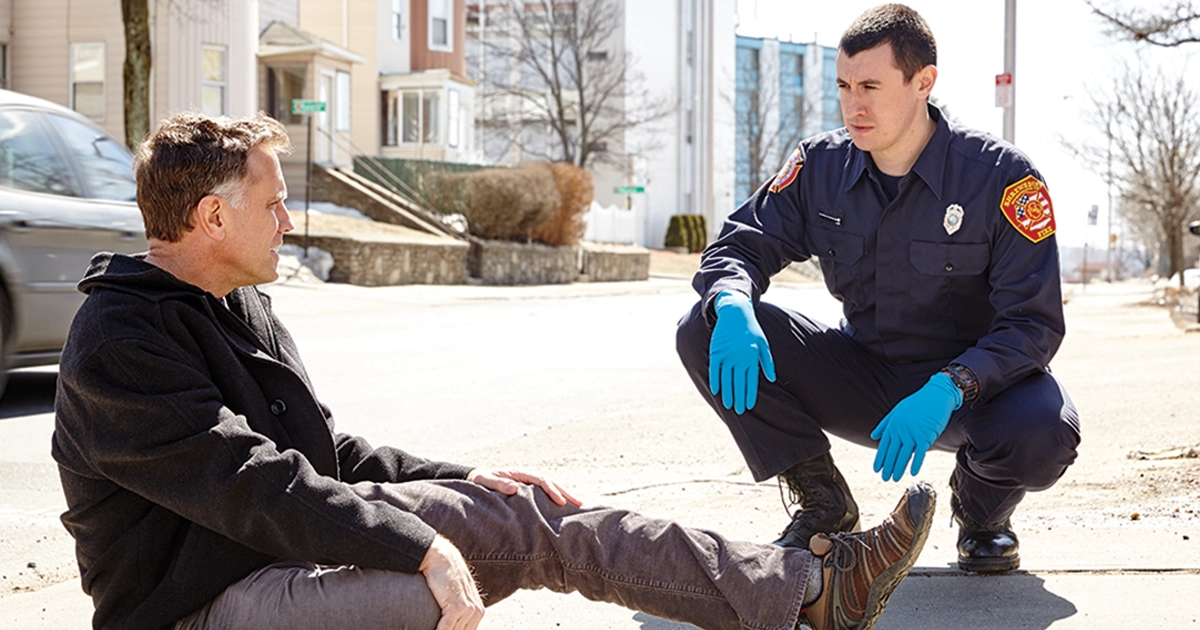
Oftentimes, it's not what you say to patients that matters. Kneeling at eye level, removing sunglasses, lowering one’s voice, and the avoidance of interrupting the patient communicate respect and calm. For patients with limited health literacy, anxiety rises quickly when they feel rushed or talked over. These behaviors should be evaluated and graded during simulation just as procedural skills are.

Culture, Language, and Trust Shape Understanding

Health literacy also intersects with culture, language, and generational factors. Some patients distrust healthcare systems. Others rely on family members to interpret information. Students should be trained to ask open‑ended questions such as, “What have you been told about this condition before?” and to use interpreter resources appropriately.

Communication Cannot Stop During High‑Stress Calls

Even during high‑stress calls, communication must not disappear. In these serious medical or trauma scenarios, someone must speak to the patient and the family: “We are helping your husband breathe,” or “We are giving medication to restart her heart.” Students must learn to toggle between technical precision in crew resource management and compassionate clarity with patients and families. That switch marks professional maturity of the EMS responder as a clinician.

If It’s Not Graded, It’s Not Prioritized

Communication must also be assessed formally. If it is not graded, students will prioritize what is. Build communication objectives into objective structured clinical examinations (OSCE) and scenario evaluations. Score clarity, pacing, tone, and use of teach‑back. Provide specific feedback. Students will only improve what you measure.

Health Literacy Is an Equity Issue

Patients with limited understanding experience worse outcomes and more medical errors, almost always due to miscommunication to the patient or between clinicians. EMS providers are often the first point of medical contact. That moment can either empower or alienate.

If we want EMS and fire students to become trusted clinicians—not just technicians—we must train them to speak in a way that patients can understand. In many calls, the most powerful intervention is not medication or oxygen. It is clarity with a heaping dose of compassion. Don’t mess up the recipe!

About the Author 

Dr. Bill Young is the Program Director and an Assistant Professor in the Fire and Paramedicine Science Department at Eastern Kentucky University (EKU), home to the second‑oldest CoAEMSP‑accredited paramedicine program in the United States. With nearly five decades of experience in EMS, Dr. Young has served as a street medic, training officer, supervisor, state regulator, and educator across multiple states. He currently serves as President of the National Association of EMS Educators. 

References 

  • Bhattad, P. B., & Pacifico, L. (2022). Empowering patients: promoting patient education and health literacy. Cureus, 14(7).

  • Fitzpatrick, P. J. (2023). Improving health literacy using the power of digital communications to achieve better health outcomes for patients and practitioners. Frontiers in digital health, 5, 1264780.

  • Kim, K., Shin, S., Kim, S., & Lee, E. (2023). The relation between eHealth literacy and health-related behaviors: systematic review and meta-analysis. Journal of medical Internet research, 25, e40778.

  • Odoh, C., Vidrine, J. I., Businelle, M. S., Kendzor, D. E., Agrawal, P., & Reitzel, L. R. (2019). Health literacy and self-rated health among homeless adults. Health behavior research, 2(4), 13.

Emergency Care and Transportation of the Sick and Injured, Thirteenth Edition:

Since 1971, Emergency Care and Transportation of the Sick and Injured has shaped EMS education worldwide, helping train generations of EMS professionals. The Thirteenth Edition introduces new health literacy content designed to strengthen EMT training.

Instructors: Request More Information
Emergency Care and Transportation of the Sick and Injured, Thirteenth Edition

Stay Connected

Categories

Search Blogs

Featured Posts

How to Teach EMS Students to Communicate with Patients with Limited Health Literacy

by  Dr. Bill Young     Mar 6, 2026
health-literacy-ems

If you want to know whether an EMS student is truly ready for the street, don’t just watch them start an IV or interpret a 12‑lead. Listen to how they talk to a frightened patient at 0200 in a cluttered living room. Clinical competence saves lives. Communication determines whether the patient trusts you enough to let you.

Health literacy, the ability to obtain, process, and understand basic health information, varies widely. Some patients can discuss their ejection fraction and medication titration. Others nod politely but do not understand what “heart attack” means. Many sit somewhere in between. As EMS educators, we must intentionally teach students how to adjust communication in real time, under pressure, without condescension or bias towards the patient.

Assume Limited Health Literacy Until Proven Otherwise

Start by teaching students to assume limited health literacy in patients. This is a safety strategy, not an insult. If you explain clearly and simply to everyone, you reduce errors across the board. Instead of saying, “You’re experiencing myocardial ischemia,” teach them to say, “Your heart muscle may not be getting enough oxygen right now.” Plain language is not “dumbing it down.” It is translating risk into understanding. In EMS, misunderstanding kills faster than hypotension.

Replace Jargon with Meaning

Students must also learn to replace medical jargon with words that mean something. Terms like “positive,” “negative,” “stable,” or “critical” can mean very different things to patients. Encourage students to pause and translate: “The test did not show a heart attack,” or “We’re going to give your heart an electrical reset.” These phrases preserve accuracy while promoting understanding.

Teach‑Back Should Be Standard Practice

After explaining something, students should ask, “Just so I know I explained it clearly, can you tell me what we’re doing next?” Following the teach-back method reframes comprehension as the provider’s responsibility, not the patient’s deficiency. Teach‑back is especially critical during refusals of care, medication instructions, or discharge education.

Treat Nonverbal Communication with Equal Importance

Oftentimes, it's not what you say to patients that matters. Kneeling at eye level, removing sunglasses, lowering one’s voice, and the avoidance of interrupting the patient communicate respect and calm. For patients with limited health literacy, anxiety rises quickly when they feel rushed or talked over. These behaviors should be evaluated and graded during simulation just as procedural skills are.

Culture, Language, and Trust Shape Understanding

Health literacy also intersects with culture, language, and generational factors. Some patients distrust healthcare systems. Others rely on family members to interpret information. Students should be trained to ask open‑ended questions such as, “What have you been told about this condition before?” and to use interpreter resources appropriately.

Communication Cannot Stop During High‑Stress Calls

Even during high‑stress calls, communication must not disappear. In these serious medical or trauma scenarios, someone must speak to the patient and the family: “We are helping your husband breathe,” or “We are giving medication to restart her heart.” Students must learn to toggle between technical precision in crew resource management and compassionate clarity with patients and families. That switch marks professional maturity of the EMS responder as a clinician.

If It’s Not Graded, It’s Not Prioritized

Communication must also be assessed formally. If it is not graded, students will prioritize what is. Build communication objectives into objective structured clinical examinations (OSCE) and scenario evaluations. Score clarity, pacing, tone, and use of teach‑back. Provide specific feedback. Students will only improve what you measure.

Health Literacy Is an Equity Issue

Patients with limited understanding experience worse outcomes and more medical errors, almost always due to miscommunication to the patient or between clinicians. EMS providers are often the first point of medical contact. That moment can either empower or alienate.

If we want EMS and fire students to become trusted clinicians—not just technicians—we must train them to speak in a way that patients can understand. In many calls, the most powerful intervention is not medication or oxygen. It is clarity with a heaping dose of compassion. Don’t mess up the recipe!

About the Author 

Dr. Bill Young is the Program Director and an Assistant Professor in the Fire and Paramedicine Science Department at Eastern Kentucky University (EKU), home to the second‑oldest CoAEMSP‑accredited paramedicine program in the United States. With nearly five decades of experience in EMS, Dr. Young has served as a street medic, training officer, supervisor, state regulator, and educator across multiple states. He currently serves as President of the National Association of EMS Educators. 

References 

  • Bhattad, P. B., & Pacifico, L. (2022). Empowering patients: promoting patient education and health literacy. Cureus, 14(7).

  • Fitzpatrick, P. J. (2023). Improving health literacy using the power of digital communications to achieve better health outcomes for patients and practitioners. Frontiers in digital health, 5, 1264780.

  • Kim, K., Shin, S., Kim, S., & Lee, E. (2023). The relation between eHealth literacy and health-related behaviors: systematic review and meta-analysis. Journal of medical Internet research, 25, e40778.

  • Odoh, C., Vidrine, J. I., Businelle, M. S., Kendzor, D. E., Agrawal, P., & Reitzel, L. R. (2019). Health literacy and self-rated health among homeless adults. Health behavior research, 2(4), 13.

Emergency Care and Transportation of the Sick and Injured, Thirteenth Edition:

Since 1971, Emergency Care and Transportation of the Sick and Injured has shaped EMS education worldwide, helping train generations of EMS professionals. The Thirteenth Edition introduces new health literacy content designed to strengthen EMT training.

Instructors: Request More Information
Emergency Care and Transportation of the Sick and Injured, Thirteenth Edition

Tags