What EMS Can Do Differently When Caring for Older Adult Patients
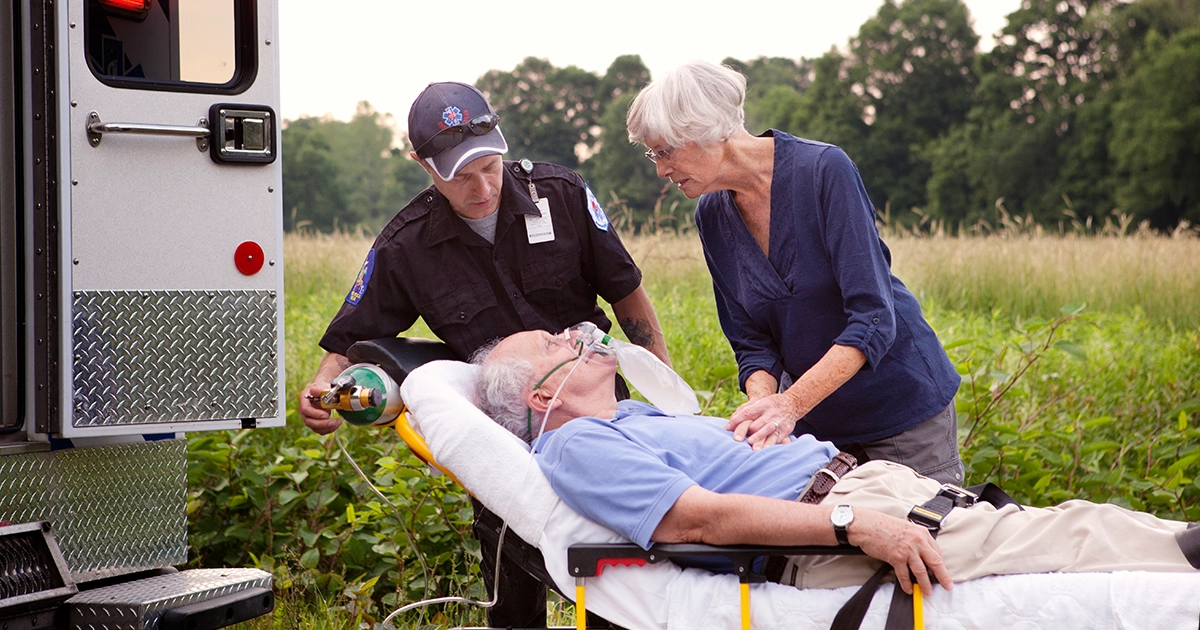
When comparing adults in terms of physical and psychosocial changes, typically there are three age groupings reported: young adults (18 to 34 years of age), mid-life adults (35 to 64 years of age), and older adults (65 years of age or older).
There are nearly 58 million Americans 65 years or older, and the projections show nearly 88.8 million in 2060. These older adults have their own health challenges and needs that EMS should know about in order to provide the best possible care during emergencies.
How Older Adults Spend Their Day
The typical day in the life of an older adult has changed substantially over the last few decades. The U.S Bureau of Labor Statistics recently released the American Time Use Survey results that compare how older adults spent their time in 2024 as compared to 2014. Some of the interesting trends uncovered in the survey include:
200% increase in computer use for leisure.
140% increase in personal religious practice.
133% increase in vehicle care.
100% increase in household childcare.
80% increase in animal and pet care.
50% increase in personal e-mail and messaging.
43% increase in sports, exercise, and recreation.
42% increase in household and personal organization.
38% increase in walking.
33% decrease in home maintenance.
39% decrease in health-related self-care.
40% decrease in reading for personal interest.
40% decrease in attending religious services.
42% decrease in caring for non-household adults.
50% decrease in personal main and correspondence.
50% decrease in educational activities.
56% decrease in arts and entertainment.
56% decrease in attending or hosting social events.
67% decrease in non-work income-generating activities.
What Have We Learned about the Aging Process?
Not everyone ages at the same rate; physical and mental activity can have a significant positive role in one’s overall health. The aging process is accompanied by changes in physiologic function. The decreases in the functional capacity of the organ system can affect how the patient responds to illness or injury. Some examples include:
Reductions in respiratory capacity: decreases in elasticity of the lungs and the size and strength of the respiratory muscles as well as calcification of the cartilage in the chest wall and musculoskeletal changes.
Cardiovascular system changes: left ventricular wall thickens and elastin in vessel walls decrease, causing thickening and rigidity in the coronary arteries. Arteriosclerosis develops and the conduction system deteriorates.
Nervous system changes: decreased performance of sense organs (visual changes and hearing loss).
Digestive system changes: decrease in taste buds, reduction of saliva and gastric secretions.
Renal system changes: unusual fluid challenges (due to illness or trauma) may overwhelm the kidneys. Acute illness is often accompanied by fluid and electrolyte imbalance.
Endocrine system changes: may lead to diabetes and thyroid abnormalities in the aging person.
Immune system changes: older patients are more susceptible to infection and secondary complications as compared to younger adults.
Integumentary system changes: thinner skin and loss of elasticity, allowing the skin to be easily torn and bleed.
Skeletal issues: decrease in bone mass especially in postmenopausal women. Bones become brittle and break easier.
Pharmacokinetics: the body’s actions on a medication may differ as compared to younger adults. The drug make take longer to react and longer to eliminate.
Impact of Comorbidities
One of the key factors in your assessment and care of older adults is obtaining a good medical history. Older adults are disproportionately affected by chronic conditions often developed over their lifetime. About 93% have at least one chronic condition, and nearly 80% have two or more. When the primary problem is affected by the presence of other preexisting conditions, those conditions are referred to as comorbidities. Those with multiple comorbidities can be at higher risk for medical emergencies. The National Council on Aging (NCOA) recently listed the top common chronic conditions found in older adults (over 65 years of age), along with the percentage of older adults the condition is found in:
Hypertension: 61%
High Cholesterol: 55%
Arthritis: 51%
Obesity: 40%
Diabetes: 24%
Cancer: 20%
Heart Disease: 16%
Depression: 15%
COPD: 12%
Asthma: 9%
Stroke: 7%
Chronic Kidney Disease: 9%
When taking a history, be sure to ask your older adult patients if they have any of these conditions.
Life in Active Adult Communities
We live in a community for active adults (3 golf courses, 8 tennis courts, 8 pickleball courts and 16 more in progress, 2 outdoor pools, 1 indoor lap pool, a great gym and spa, sand volleyball, tons of nearby multi-use paths, leading to the 46-mile rails to trails bike path). Some folks in our community like to do everything, and some like me and my wife simply pick and choose what fits our busy schedules. With close to 365 days a year of sunshine and only a handful of “cold” days, there is no excuse to not get outside. Most of my neighbors are 70-85 years old. Some are out on the golf course, pickleball court, or in the gym every single morning.
As we all get older, it does not mean we are all headed for a nursing home. Sometimes EMT students figure their grandparents were sick and frail, so all older adults must be that way. Just as we should not assume all 20-year-olds are addicted to their smart phones and have difficulty communicating face-to-face, we should not assume all those older adults are frail, confused, and restrained in a bed in the home.
Pickleball Injuries in Active Adult Communities
Pickleball is a paddle sport that blends tennis, table tennis, and badminton. It’s played on a smaller court with a low net, a lightweight perforated plastic ball, and solid paddles. Games can be played as singles or doubles, but many older adults favor doubles for social interaction and a slightly slower pace.
The sport began to gain momentum in the mid-2000s, when retirement communities across Arizona and Florida adopted it.
During the pandemic, there was a pickleball boom. With gyms closed and people craving outdoor, socially distant activities, there was a surge in participation. From 2021 to 2024 the number of players in the U.S. increased by 311%, reaching nearly 20 million.
Pickleball is a low‑impact workout that’s easier on the joints than running, basketball, or tennis. Its smaller court reduces strain, and regular play improves balance, coordination, and hip and core strength, which can help older adults reduce their risks of falls.
Pickleball does come with a few risks. Over 90% of the injuries occur in adults aged 50 and older, with the majority affecting those between 60 and 79 years old. One of the most striking trends has been the rise in fractures. Between 2002 and 2022, the rate of fractures from pickleball increased 90-fold, with adults aged 60–69 experiencing the steepest increase.
Common older adult injuries include sprains, strains, fractures, contusions, and abrasions
A Simple Lift Assist…Beware of Falls
Most emergency responders have been there: a call to 911 to help put an older adult back in their bed/favorite chair. It is estimated these calls account for 17% of 911 calls. Although more than 21% of these calls do not result in transport to the hospital, it is estimated that 50% of lift-assist calls result in a second lift-assist call within two weeks.
Some services have started to look at these calls as an opportunity for additional assessment and intervention to prevent injury to older adults. Sometimes there are teachable moments to give advice on removing clutter from the floors, removing throw rugs, adding grab bars in the bathroom, handrails and lighting on staircases, learning the side effects of medications and contacting community adult services to assist the patient that may prevent a future catastrophe.
There are 3 million older adults who are treated in the ED for unintentional fall injuries each year. The nation spends $50 billion a year treating older adults for the effects of falls. If fall rates are not reduced, direct treatment costs are projected to reach $101 billion by 2030. For additional information review the CDC’s Stopping Elderly Accidents, Deaths & Injuries (STEADI) program and the NFPA’s Steps to Safety™ program.
Pharmacology and the Older Adult
Therapeutic doses of medications are sometimes affected by how the drug is distributed in the body (i.e.; water, lipids or fat, and protein) as well as how the drug is eliminated from the body. Older adult patients tend to have a higher percentage of fats and lower percentage of body water. The older adult may have prolonged and cumulative effects of a medication retained in their fat and take a longer amount of time to be eliminated by the liver and kidneys.
Medication management by the prescribing physician, with advice from the pharmacy, can reduce interactions and side effects that may lead to falls. To properly manage these issues the patient’s medical history is essential, especially all the chronic conditions they are being treated for and the complete medication list (including OTC, vitamins, herbal supplements and recreational drugs). A list of allergies is also helpful.
It is strongly suggested that all patients have an accurate and complete written listing of their medical history that can be shared with the EMS providers attending to them. Pay attention to patients taking psychoactive medications such as anticonvulsants, antidepressants, antipsychotics, benzodiazepines, opioids, and sedative-hypnotics. Typically, OTC meds such as anticholinergics, antihistamines, medications affecting the BP, and muscle relaxants can cause dizziness, sedation, confusion, blurred vision, or orthostatic hypotension.
In Summary
Active Adult Communities should have a plan at their sports venues for medical & trauma emergencies (CPR trained providers, Stop the Bleed® (some of those folks are on blood thinners), AEDs located nearby and accessible to the public.
Incorporate evidence-based geriatric training in your EMT and paramedic courses. Geriatric Education for Emergency Medical Services (GEMS), Third Edition, explores assessment and lifesaving care tailored to older adults. Because so many EMS calls are for older patients, this course manual would be an excellent training investment.
Perhaps your EMT course might include a guest speaker who is a retired, but active, enthusiastic paramedic that students would walk away saying,” wow I hope I am that vivacious when I get to be his/her age!”
Consider setting up a Fall Prevention program. The NFPA Steps to Safety™ program pairs up fire and EMS providers with community partners to educate older adults about home fire and fall safety.
Perhaps it is time to review your life-assist policy to not only properly document the assessment and care given but to also try to offer assistance to prevent future falls.
And as always, be careful out there!
References:
https://www.macrotrends.net/datasets/global-metrics/countries/usa/united-states/life-expectancy
Kathleen B. Watson, et al. Trends in Multiple Chronic Conditions Among US Adults, By Life Stage, Behavioral Risk Factors Surveillance System, 2013-2023. Preventing Chronic Disease. April 17, 2025
Cone DC. Ahern J, Lee CH, et al. A descriptive study of the “lift-assist” call. Prehosp Emerg Care. 2013 Jan-Mar; 17(1):51-6.
https://flagshiphealth.org/resources/blog/pickleball-for-seniors-stay-active-avoid-injury/
About the Author:
Bob Elling, MPA, Paramedic (retired) – has been a career paramedic, educator, author, and EMS advocate for 5 decades. He was a paramedic with the Town of Colonie EMS Department, Albany Times Union Center, and Whiteface Mountain Medical Services. He was also an Albany Medical Center Clinical Instructor at the HVCC Paramedic Program. Bob served as AHA National/Regional Faculty and participated in many successful life-saving legislative campaigns with the You’re the Cure Network®. Bob served as paramedic and lieutenant for New York City EMS, a paramedic program director, and associate director of New York State EMS Bureau. He has authored hundreds of articles, videos, Blogs, and textbooks to prepare EMS providers for their career. Bob is the ECSI Series Editor for the CPR and First Aid books, Co-Author of EVOS-2, and Co-Lead Editor of Nancy Caroline’s Emergency Care in the Streets.
Geriatric Education for Emergency Medical Services, Third Edition
The third edition of Geriatric Education for Emergency Medical Services is authored by experts in the field and endorsed by the National Association of Emergency Medical Technicians (NAEMT). The new edition addresses the National EMS Education Standards in 15 chapters.
Request More Information