The Public Safety Group Blog


How Instructors Can Make TECC Education More Realistic
by  Public Safety Group     Oct 9, 2026
tecc-education

For instructors, teaching Tactical Emergency Casualty Care (TECC) often comes down to one question: how do you help students feel ready to act when an emergency is chaotic, fast-moving, and unlike anything they have practiced in a standard classroom? 

Jeff McPhearson has spent nearly 40 years in EMS, starting as a teenager and eventually building a career in fire and emergency medical services. Today, he serves as the EMS Training Supervisor at Hanover Fire and EMS in Hanover, Virginia, where he oversees EMS training programs and teaches clinicians the skills they need to respond in high-risk, high-pressure situations. 

McPhearson sat down with the Public Safety Group to talk about teaching TECC, including how instructors can make the course more realistic, how to involve the right partners, and how to help newer prehospital clinicians understand the responsibility that comes with learning these skills.  

Give TECC Education the Focus It Deserves 

McPhearson recommends treating TECC as its own focused experience rather than trying to squeeze it into a short block of instruction. That dedicated time helps instructors move beyond simple check-the-box skills instruction. Students can practice interventions, work through communication issues, and experience how quickly an ideal plan can change once the scenario begins.  

“We normally teach all hours on a weekend, a Friday night, a Saturday, a Sunday,” he says. “Depending on what’s happening, that allows for your audience to be focused on that TECC course.” 

That time also allows instructors to debrief meaningfully. In scenario-based TECC education, lessons continue to happen once the scenario ends: what students noticed, what they missed, how they communicated, and why they made certain decisions. Instructors can use those conversations to connect the experience back to the course objectives and reinforce the judgment behind the skills. 

Use Realistic Scenarios to Teach Skills 

TECC skills can seem straightforward in a classroom setting, but McPhearson says the real learning happens when students have to apply those skills under pressure.  

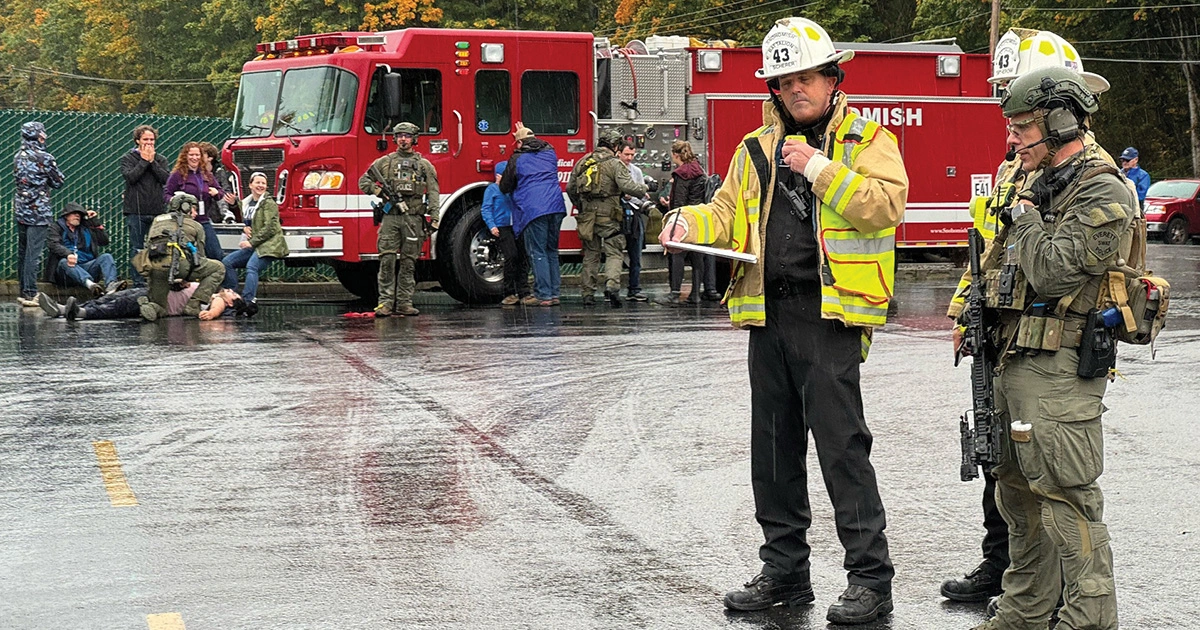
Triage, tourniquets, wound packing, airway management, needle decompression, casualty movement, and communication all become more meaningful when they are tied to realistic, situation-based education. And that realism does not always require expensive simulation equipment. McPhearson shared examples of using simple materials like meat to make practicing tourniquet applications feel more lifelike. As he notes, the goal is not to shock students, but to instill confidence.  

“Building that critical thinking up in these types of scenarios and this type of task does nothing but help build the confidence up for that clinician,” McPhearson says.  

Bring the Right Partners into the Classroom 

TECC is meant for civilian tactical response to active shooter or other hostile assailant events. Students should not only learn what to do medically and when to do it, but they should learn how their role fits into a larger response. During an actual incident, responders may be working with patients, coordinating with law enforcement, and communicating with receiving facilities. McPhearson recommends involving other stakeholders whenever possible during education. 

“It has to be a working relationship between your fire, EMS, sheriffs, and police officers,” he says.  

McPhearson suggests starting with tabletop exercises before moving into more complex hands-on scenarios. A tabletop gives agencies space to identify who needs to be involved, what assumptions they are making, and where gaps may exist in their current plans. From there, instructors can build scenarios that reflect local realities, whether that means school layouts, hospital notification processes, rescue task force formation, or communication between responders who do not routinely train together. 

Teach TECC in the Places Where Incidents May Happen 

In an emergency, even the most familiar building can become difficult to navigate. To combat this potential challenge, McPhearson recommends performing TECC scenarios outside of the classroom. Using schools, auditoriums, and other community spaces can help prehospital clinicians understand the physical layout and operational challenges they may encounter during a real tactical event.  

“I would highly recommend using schools because if you look at your history of where all these incidents have happened, [it’s] schools, universities, things of that nature,” he says. “All these are soft targets. And the more you train in these schools, the more you get your people acclimated to how these schools lay out, the SOPs, SOGs that they have.” 

Choose Top Resources for TECC Education 

Strong TECC instruction starts with an experienced instructor, but the right resources matter, too. Clear, well-organized materials can help instructors turn current evidence into practical lessons, realistic scenarios, and education that fits the needs of their students and communities. 

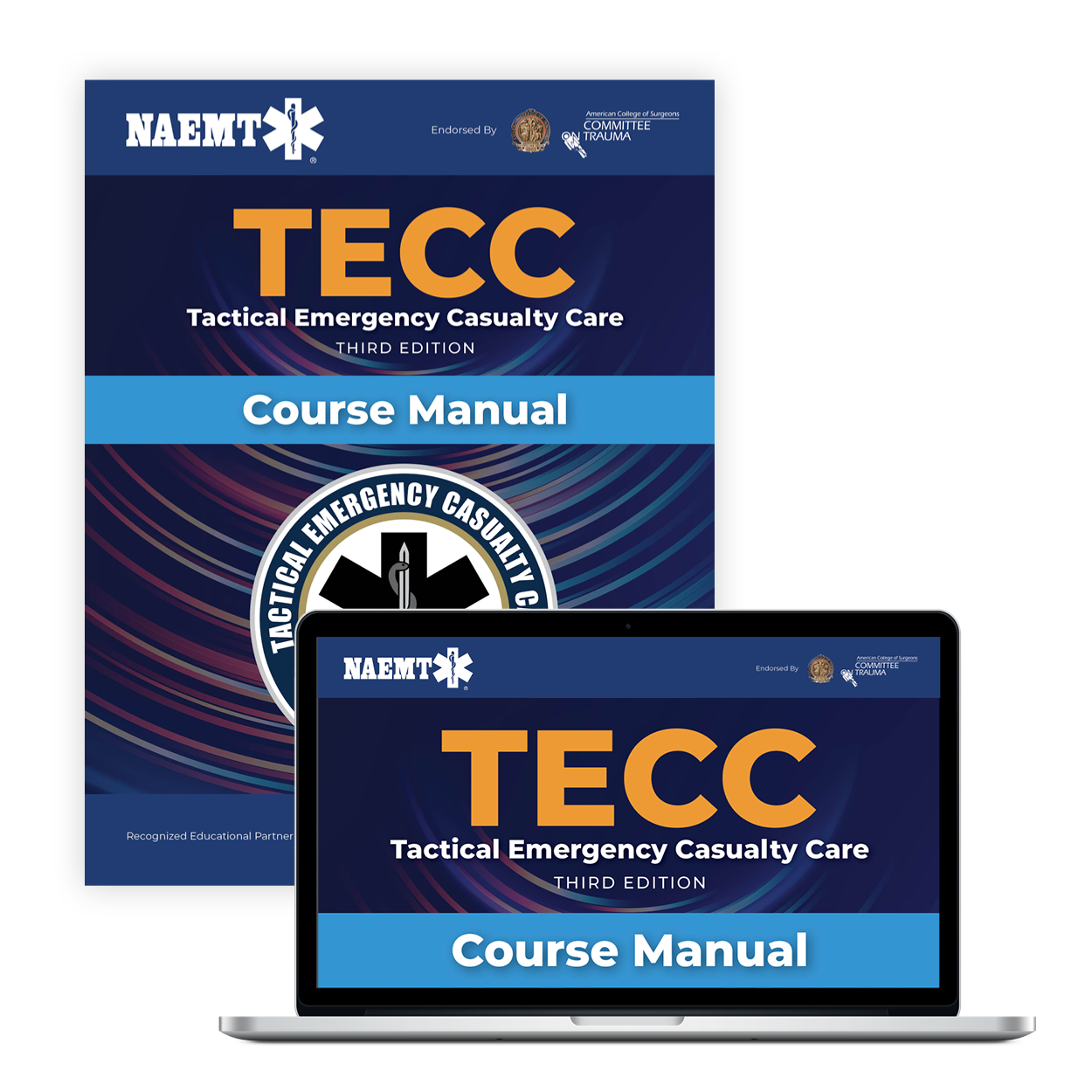
The NAEMT and Public Safety Group’s TECC: Tactical Emergency Casualty Care, Third Edition course manual and instructor toolkit gives instructors that foundation for civilian tactical emergency care education. Developed by NAEMT for EMS clinicians, it includes updated, evidence-based content; MARCH-focused lessons; active shooter and hostile event scenarios; triage exercises; patient simulations; skill drills; pediatric considerations; and guidance on psychological response and clinician mental health. 


Seek Mentorship Before Teaching TECC 

TECC education is about more than just content. Instructors need to understand how to facilitate realistic scenarios, keep students safe, and guide learners through difficult conversations about triage, violence, trauma, and response. Because the course involves high-risk skills, complex scenarios, and multiagency coordination, McPhearson recommends that new instructors seek mentorship before teaching TECC on their own. 

“I would get with another instructor that’s [been] doing it for a while, because whenever you want to teach something new, it’s your reputation at hand,” he says. “So, get with somebody who’s been doing it a while, pick up some of the tricks.” 

Mentorship can also help instructors learn what does and does not work in the classroom. Experienced TECC instructors can share how they set up skill stations, how they pace the course, what equipment they use, and how they keep scenarios realistic without making them unmanageable. 

Effective Education for the Newest Generation of Clinicians 

While scenario-based education is an effective way to teach future first responders, instructors may also need to think of how they can introduce TECC skills to younger generations of students. Many newer clinicians are only familiar with emergency response, trauma, or violence through games, videos, and social platforms. 

For instructors, the challenge is to connect what students may think they understand with the reality of patient care, where hesitation, discomfort, and uncertainty can affect performance. Students may need time, coaching, and honest conversations before they are ready to engage fully with realistic trauma simulations. 

McPhearson describes this as a mix of support and accountability. Students may be hesitant, he says, but instructors should pair that support with tough love, telling them, "You're going to have to understand how to do this. You could be the difference between somebody living or dying." 

That does not mean instructors should dismiss students’ experiences or assume they are unprepared. Instead, deliberate coaching is key. Instructors should explain the purpose behind the education, demonstrate techniques carefully, and then give students enough repetition to move from hesitancy to competence. 

Plan for “When,” Not “If” 

When done well, TECC education gives students more than a set of skills. It gives them a framework for thinking, communicating, and acting when a civilian tactical emergency unfolds. Communities need responders who have practiced these skills before they are asked to use them. A tactical emergency is not something responders can afford to approach reactively. As McPhearson notes, “Don’t think if it’s going to happen. Plan on when it’s going to happen, and be ready.”

TECC: Tactical Emergency Combat Care, Third Edition

Developed by the National Association of Emergency Medical Technicians (NAEMT), TECC, Third Edition reflects current medical knowledge and practice, and promotes critical thinking as the foundation for providing quality care. The Third Edition is consistent with the most recent Committee for Tactical Emergency Casualty Care (C-TECC) advanced life support / basic life support (ALS/BLS) guidelines.

Request More Information   
  
TECC: Tactical Emergency Combat Care, Third Edition

Stay Connected

Categories

Search Blogs

Featured Posts

How Instructors Can Make TECC Education More Realistic

by  Public Safety Group     Oct 9, 2026
tecc-education

For instructors, teaching Tactical Emergency Casualty Care (TECC) often comes down to one question: how do you help students feel ready to act when an emergency is chaotic, fast-moving, and unlike anything they have practiced in a standard classroom? 

Jeff McPhearson has spent nearly 40 years in EMS, starting as a teenager and eventually building a career in fire and emergency medical services. Today, he serves as the EMS Training Supervisor at Hanover Fire and EMS in Hanover, Virginia, where he oversees EMS training programs and teaches clinicians the skills they need to respond in high-risk, high-pressure situations. 

McPhearson sat down with the Public Safety Group to talk about teaching TECC, including how instructors can make the course more realistic, how to involve the right partners, and how to help newer prehospital clinicians understand the responsibility that comes with learning these skills.  

Give TECC Education the Focus It Deserves 

McPhearson recommends treating TECC as its own focused experience rather than trying to squeeze it into a short block of instruction. That dedicated time helps instructors move beyond simple check-the-box skills instruction. Students can practice interventions, work through communication issues, and experience how quickly an ideal plan can change once the scenario begins.  

“We normally teach all hours on a weekend, a Friday night, a Saturday, a Sunday,” he says. “Depending on what’s happening, that allows for your audience to be focused on that TECC course.” 

That time also allows instructors to debrief meaningfully. In scenario-based TECC education, lessons continue to happen once the scenario ends: what students noticed, what they missed, how they communicated, and why they made certain decisions. Instructors can use those conversations to connect the experience back to the course objectives and reinforce the judgment behind the skills. 

Use Realistic Scenarios to Teach Skills 

TECC skills can seem straightforward in a classroom setting, but McPhearson says the real learning happens when students have to apply those skills under pressure.  

Triage, tourniquets, wound packing, airway management, needle decompression, casualty movement, and communication all become more meaningful when they are tied to realistic, situation-based education. And that realism does not always require expensive simulation equipment. McPhearson shared examples of using simple materials like meat to make practicing tourniquet applications feel more lifelike. As he notes, the goal is not to shock students, but to instill confidence.  

“Building that critical thinking up in these types of scenarios and this type of task does nothing but help build the confidence up for that clinician,” McPhearson says.  

Bring the Right Partners into the Classroom 

TECC is meant for civilian tactical response to active shooter or other hostile assailant events. Students should not only learn what to do medically and when to do it, but they should learn how their role fits into a larger response. During an actual incident, responders may be working with patients, coordinating with law enforcement, and communicating with receiving facilities. McPhearson recommends involving other stakeholders whenever possible during education. 

“It has to be a working relationship between your fire, EMS, sheriffs, and police officers,” he says.  

McPhearson suggests starting with tabletop exercises before moving into more complex hands-on scenarios. A tabletop gives agencies space to identify who needs to be involved, what assumptions they are making, and where gaps may exist in their current plans. From there, instructors can build scenarios that reflect local realities, whether that means school layouts, hospital notification processes, rescue task force formation, or communication between responders who do not routinely train together. 

Teach TECC in the Places Where Incidents May Happen 

In an emergency, even the most familiar building can become difficult to navigate. To combat this potential challenge, McPhearson recommends performing TECC scenarios outside of the classroom. Using schools, auditoriums, and other community spaces can help prehospital clinicians understand the physical layout and operational challenges they may encounter during a real tactical event.  

“I would highly recommend using schools because if you look at your history of where all these incidents have happened, [it’s] schools, universities, things of that nature,” he says. “All these are soft targets. And the more you train in these schools, the more you get your people acclimated to how these schools lay out, the SOPs, SOGs that they have.” 

Choose Top Resources for TECC Education 

Strong TECC instruction starts with an experienced instructor, but the right resources matter, too. Clear, well-organized materials can help instructors turn current evidence into practical lessons, realistic scenarios, and education that fits the needs of their students and communities. 

The NAEMT and Public Safety Group’s TECC: Tactical Emergency Casualty Care, Third Edition course manual and instructor toolkit gives instructors that foundation for civilian tactical emergency care education. Developed by NAEMT for EMS clinicians, it includes updated, evidence-based content; MARCH-focused lessons; active shooter and hostile event scenarios; triage exercises; patient simulations; skill drills; pediatric considerations; and guidance on psychological response and clinician mental health. 


Seek Mentorship Before Teaching TECC 

TECC education is about more than just content. Instructors need to understand how to facilitate realistic scenarios, keep students safe, and guide learners through difficult conversations about triage, violence, trauma, and response. Because the course involves high-risk skills, complex scenarios, and multiagency coordination, McPhearson recommends that new instructors seek mentorship before teaching TECC on their own. 

“I would get with another instructor that’s [been] doing it for a while, because whenever you want to teach something new, it’s your reputation at hand,” he says. “So, get with somebody who’s been doing it a while, pick up some of the tricks.” 

Mentorship can also help instructors learn what does and does not work in the classroom. Experienced TECC instructors can share how they set up skill stations, how they pace the course, what equipment they use, and how they keep scenarios realistic without making them unmanageable. 

Effective Education for the Newest Generation of Clinicians 

While scenario-based education is an effective way to teach future first responders, instructors may also need to think of how they can introduce TECC skills to younger generations of students. Many newer clinicians are only familiar with emergency response, trauma, or violence through games, videos, and social platforms. 

For instructors, the challenge is to connect what students may think they understand with the reality of patient care, where hesitation, discomfort, and uncertainty can affect performance. Students may need time, coaching, and honest conversations before they are ready to engage fully with realistic trauma simulations. 

McPhearson describes this as a mix of support and accountability. Students may be hesitant, he says, but instructors should pair that support with tough love, telling them, "You're going to have to understand how to do this. You could be the difference between somebody living or dying." 

That does not mean instructors should dismiss students’ experiences or assume they are unprepared. Instead, deliberate coaching is key. Instructors should explain the purpose behind the education, demonstrate techniques carefully, and then give students enough repetition to move from hesitancy to competence. 

Plan for “When,” Not “If” 

When done well, TECC education gives students more than a set of skills. It gives them a framework for thinking, communicating, and acting when a civilian tactical emergency unfolds. Communities need responders who have practiced these skills before they are asked to use them. A tactical emergency is not something responders can afford to approach reactively. As McPhearson notes, “Don’t think if it’s going to happen. Plan on when it’s going to happen, and be ready.”

TECC: Tactical Emergency Combat Care, Third Edition

Developed by the National Association of Emergency Medical Technicians (NAEMT), TECC, Third Edition reflects current medical knowledge and practice, and promotes critical thinking as the foundation for providing quality care. The Third Edition is consistent with the most recent Committee for Tactical Emergency Casualty Care (C-TECC) advanced life support / basic life support (ALS/BLS) guidelines.

Request More Information   
  
TECC: Tactical Emergency Combat Care, Third Edition

Tags