The Public Safety Group Blog


From First on Scene to One EMS Team: How EMRs and EMTs Can Work Better Together
by  Dr. Bill Young     Aug 18, 2026
emt-emr

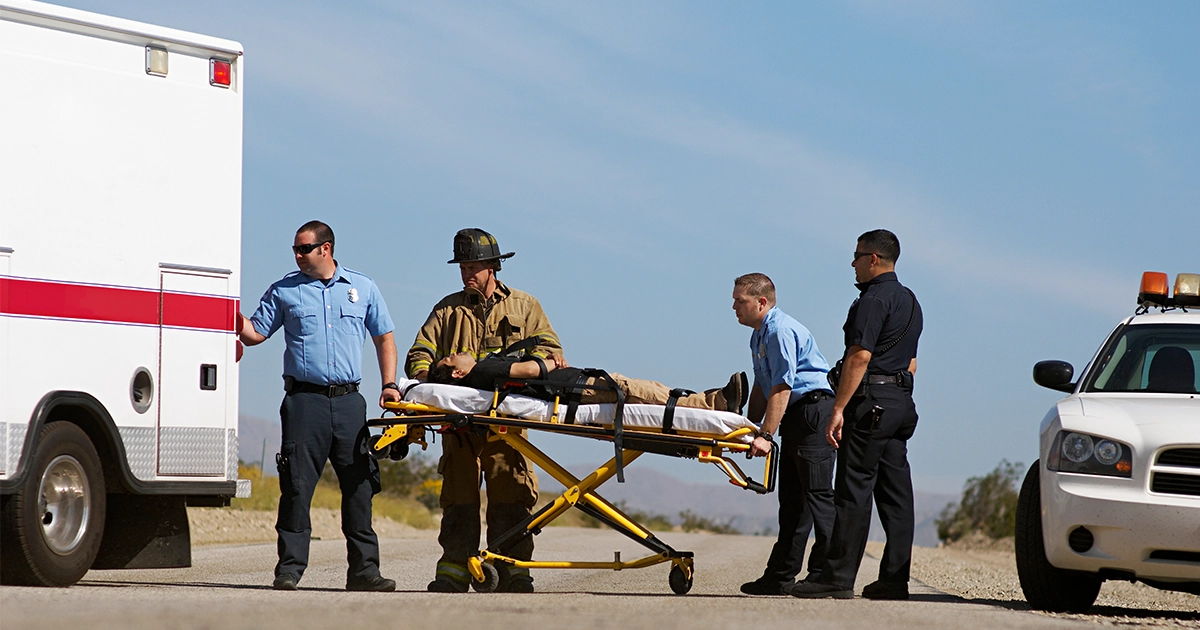
When an emergency medical responder (EMR) arrives before an ambulance, the patient does not need a title, patch, or agency competition. The patient needs immediate, organized care. Whether that EMR comes from a fire department, law enforcement agency, industrial response team, or volunteer service, the goal is the same: recognize threats, begin lifesaving interventions, and prepare for the next level of care. 

Once an EMT, AEMT, or paramedic arrives, however, the EMR’s value does not suddenly evaporate! Effective care depends on the two providers quickly becoming one team. 

Build the Relationship Before the Call 

Collaboration improves when agencies train together, use compatible terminology, review local scopes of practice, and discuss expectations for transferring care. Short interagency simulations can reveal problems involving equipment, radio communication, documentation, and leadership long before those problems reach a real patient. 

The best EMR–EMT partnership is not based on determining whose role is more important. It is based on recognizing when each person’s preparation is most valuable. The EMR brings early access, immediate intervention, local knowledge, and additional experienced hands. The EMT or paramedic adds broader assessment, expanded treatment options, and transport capability. 

When those strengths are connected through respectful leadership, structured handoffs, and clear communication, the transition between providers becomes nearly invisible. To the patient, it feels like what it should have been all along: one coordinated team arriving in stages. 

Begin With a Shared Mental Model 

EMRs and EMTs receive different levels of education and operate under different scopes of practice, but much of their basic training overlaps. Both learn scene safety, patient assessment, airway management, resuscitation, bleeding control, medical and trauma care, and communication. 

The precise procedures each provider may perform vary by state, medical direction, agency policy, and local protocol. An intervention permitted for an EMR in one jurisdiction may be restricted in another. Consequently, providers should never assume that a credential automatically authorizes a particular skill. The safest question is not, “What does an EMR do?” but “What is this EMR trained, authorized, and equipped to do here?” 

That conversation should occur long before an emergency if possible. Joint training allows team members to learn one another’s capabilities without trying to conduct a résumé review while caring for a patient who is not breathing. 

Use EMR Training from the First Minute 

The chapters and skill areas in Emergency Medical Responder: Your First Response in Emergency Care by Jones & Bartlett Learning addressing Scene Size-Up and the Primary Assessment reflect some of the EMR’s most valuable contributions. Before transport personnel arrive, the EMR can identify hazards, determine the number of patients, recognize the possible mechanism of injury or nature of illness, request additional resources, and locate the patient. 

That information can save the responding ambulance crew precious time. A concise radio update might include: 

“Single adult patient, unresponsive after a fall of approximately 12 feet. Airway is open, breathing is inadequate, and assisted ventilation is in progress. No major external bleeding. Access is through the east gate.” 

This report paints a clinical picture for the incoming crew, identifies an intervention already underway, and provides practical access information. It is far more useful than either extreme: “Patient is stable” (what does “stable” really mean?), or the legendary five-minute radio novel in which the patient’s condition stays a mystery until the final chapter. 

Establish Leadership Without Creating Friction 

When the transporting crew arrives, someone must coordinate patient care. In most systems, the highest-level EMS clinician assumes responsibility for clinical decision-making. That transition should be clear, brief, and above all…respectful. 

The arriving EMT or paramedic might say, “I have patient care. Please continue ventilations while I assess.” That statement establishes leadership while preserving an important intervention. The EMR can respond with a focused summary and confirm that patient care will continue.  

Taking the lead does not mean starting the entire call over. Good team leaders build upon what has already been done. If the EMR has applied a tourniquet, started CPR, administered an authorized medication, or gathered a history, the arriving clinician should verify the intervention and incorporate it into the care plan. 

Likewise, an EMR should not interpret the arrival of a higher-level clinician as a signal to step away unless directed. The EMR’s most effective question should be, “What would you like me to continue or do next?”The responding EMT should then incorporate the EMR into the continuing treatment of the patient where appropriate. 

Make the Handoff Short, Structured, and Clinical 

The skill areas involving Patient Assessment, Communication, and Documentation should guide the EMR’s verbal handoff. A useful report includes: 

  • What happened or what the patient reported

  • What the EMR found during the initial assessment

  • Important changes in the patient’s condition

  • Interventions performed and the patient’s response.

  • Relevant medications, allergies, history, or statements from witnesses

  • Any safety, access, or operational concerns 

A structured approach can help keep the report organized. The exact mnemonic matters less than delivering the right information in a predictable order. 

Objective findings are very important. “The patient is acting strangely” is less helpful than, “The patient was initially alert and answering appropriately but became confused approximately three minutes ago.” Clear observations allow the receiving clinician to recognize trends and make better decisions. 

Continue Using EMRs After the Ambulance Arrives 

The skills Airway and Respiratory Care, CPR and AED Use, Bleeding Control, Spinal Motion Restriction, and Patient Movement continue to be valuable throughout the call. Depending on local authorization and the clinical situation, an EMR may continue ventilation, perform compressions, stabilize an airway device, reassess bleeding, assist with packaging, obtain vital signs, gather medications, interview family members, or prepare a landing zone. 

These are not minor tasks. A paramedic managing medications, cardiac rhythms, and advanced procedures may depend upon an EMR to report changes in chest rise, pulse quality, mental status, or skin signs. The quality of advanced care often rests on how reliably the basic groundwork is performed. 

Law enforcement EMRs can also manage crowds, identify witnesses, preserve evidence, control traffic, and communicate safety threats. Fire-service EMRs may assist with access, extrication, lifting, and hazard control. These agency-specific capabilities strengthen patient care when they are integrated into the medical plan rather than operating beside it. 

Practice Closed-Loop Communication 

High-performing teams communicate directly. The person giving an assignment names the intended recipient: “Officer Davis, maintain manual stabilization.” The recipient confirms it: “I have stabilization.” Completion or a significant change is then reported: “Stabilization maintained; the patient now reports numbness in the left hand.” 

This closed-loop approach decreases missed tasks and uncertain assumptions. It is especially useful when personnel from several agencies are working together and may not know one another. It leads to better patient care, outcomes, and a reduction in medical errors. 

EMRs should also speak up when they observe a safety problem or important clinical change. EMS chain of command should organize care, not silence useful information. A respectful statement such as, “I’m concerned that his breathing has become slower since your last assessment,” gives the team leader actionable information without creating unnecessary conflict. 

Emergency Medical Responder: Your First Response in Emergency Care, Eighth Edition

Realistic supplements, such as case studies, words of wisdom, and voices of experience, help provide an in-depth understanding of the content and serve as a foundation of knowledge for first-time students. This text and support material will prepare students for the high-stakes setting of prehospital emergency care.

Request More Information

Emergency Medical Responder: Your First Response in Emergency Care, Eighth Edition

Stay Connected

Categories

Search Blogs

Featured Posts

From First on Scene to One EMS Team: How EMRs and EMTs Can Work Better Together

by  Dr. Bill Young     Aug 18, 2026
emt-emr

When an emergency medical responder (EMR) arrives before an ambulance, the patient does not need a title, patch, or agency competition. The patient needs immediate, organized care. Whether that EMR comes from a fire department, law enforcement agency, industrial response team, or volunteer service, the goal is the same: recognize threats, begin lifesaving interventions, and prepare for the next level of care. 

Once an EMT, AEMT, or paramedic arrives, however, the EMR’s value does not suddenly evaporate! Effective care depends on the two providers quickly becoming one team. 

Build the Relationship Before the Call 

Collaboration improves when agencies train together, use compatible terminology, review local scopes of practice, and discuss expectations for transferring care. Short interagency simulations can reveal problems involving equipment, radio communication, documentation, and leadership long before those problems reach a real patient. 

The best EMR–EMT partnership is not based on determining whose role is more important. It is based on recognizing when each person’s preparation is most valuable. The EMR brings early access, immediate intervention, local knowledge, and additional experienced hands. The EMT or paramedic adds broader assessment, expanded treatment options, and transport capability. 

When those strengths are connected through respectful leadership, structured handoffs, and clear communication, the transition between providers becomes nearly invisible. To the patient, it feels like what it should have been all along: one coordinated team arriving in stages. 

Begin With a Shared Mental Model 

EMRs and EMTs receive different levels of education and operate under different scopes of practice, but much of their basic training overlaps. Both learn scene safety, patient assessment, airway management, resuscitation, bleeding control, medical and trauma care, and communication. 

The precise procedures each provider may perform vary by state, medical direction, agency policy, and local protocol. An intervention permitted for an EMR in one jurisdiction may be restricted in another. Consequently, providers should never assume that a credential automatically authorizes a particular skill. The safest question is not, “What does an EMR do?” but “What is this EMR trained, authorized, and equipped to do here?” 

That conversation should occur long before an emergency if possible. Joint training allows team members to learn one another’s capabilities without trying to conduct a résumé review while caring for a patient who is not breathing. 

Use EMR Training from the First Minute 

The chapters and skill areas in Emergency Medical Responder: Your First Response in Emergency Care by Jones & Bartlett Learning addressing Scene Size-Up and the Primary Assessment reflect some of the EMR’s most valuable contributions. Before transport personnel arrive, the EMR can identify hazards, determine the number of patients, recognize the possible mechanism of injury or nature of illness, request additional resources, and locate the patient. 

That information can save the responding ambulance crew precious time. A concise radio update might include: 

“Single adult patient, unresponsive after a fall of approximately 12 feet. Airway is open, breathing is inadequate, and assisted ventilation is in progress. No major external bleeding. Access is through the east gate.” 

This report paints a clinical picture for the incoming crew, identifies an intervention already underway, and provides practical access information. It is far more useful than either extreme: “Patient is stable” (what does “stable” really mean?), or the legendary five-minute radio novel in which the patient’s condition stays a mystery until the final chapter. 

Establish Leadership Without Creating Friction 

When the transporting crew arrives, someone must coordinate patient care. In most systems, the highest-level EMS clinician assumes responsibility for clinical decision-making. That transition should be clear, brief, and above all…respectful. 

The arriving EMT or paramedic might say, “I have patient care. Please continue ventilations while I assess.” That statement establishes leadership while preserving an important intervention. The EMR can respond with a focused summary and confirm that patient care will continue.  

Taking the lead does not mean starting the entire call over. Good team leaders build upon what has already been done. If the EMR has applied a tourniquet, started CPR, administered an authorized medication, or gathered a history, the arriving clinician should verify the intervention and incorporate it into the care plan. 

Likewise, an EMR should not interpret the arrival of a higher-level clinician as a signal to step away unless directed. The EMR’s most effective question should be, “What would you like me to continue or do next?”The responding EMT should then incorporate the EMR into the continuing treatment of the patient where appropriate. 

Make the Handoff Short, Structured, and Clinical 

The skill areas involving Patient Assessment, Communication, and Documentation should guide the EMR’s verbal handoff. A useful report includes: 

  • What happened or what the patient reported

  • What the EMR found during the initial assessment

  • Important changes in the patient’s condition

  • Interventions performed and the patient’s response.

  • Relevant medications, allergies, history, or statements from witnesses

  • Any safety, access, or operational concerns 

A structured approach can help keep the report organized. The exact mnemonic matters less than delivering the right information in a predictable order. 

Objective findings are very important. “The patient is acting strangely” is less helpful than, “The patient was initially alert and answering appropriately but became confused approximately three minutes ago.” Clear observations allow the receiving clinician to recognize trends and make better decisions. 

Continue Using EMRs After the Ambulance Arrives 

The skills Airway and Respiratory Care, CPR and AED Use, Bleeding Control, Spinal Motion Restriction, and Patient Movement continue to be valuable throughout the call. Depending on local authorization and the clinical situation, an EMR may continue ventilation, perform compressions, stabilize an airway device, reassess bleeding, assist with packaging, obtain vital signs, gather medications, interview family members, or prepare a landing zone. 

These are not minor tasks. A paramedic managing medications, cardiac rhythms, and advanced procedures may depend upon an EMR to report changes in chest rise, pulse quality, mental status, or skin signs. The quality of advanced care often rests on how reliably the basic groundwork is performed. 

Law enforcement EMRs can also manage crowds, identify witnesses, preserve evidence, control traffic, and communicate safety threats. Fire-service EMRs may assist with access, extrication, lifting, and hazard control. These agency-specific capabilities strengthen patient care when they are integrated into the medical plan rather than operating beside it. 

Practice Closed-Loop Communication 

High-performing teams communicate directly. The person giving an assignment names the intended recipient: “Officer Davis, maintain manual stabilization.” The recipient confirms it: “I have stabilization.” Completion or a significant change is then reported: “Stabilization maintained; the patient now reports numbness in the left hand.” 

This closed-loop approach decreases missed tasks and uncertain assumptions. It is especially useful when personnel from several agencies are working together and may not know one another. It leads to better patient care, outcomes, and a reduction in medical errors. 

EMRs should also speak up when they observe a safety problem or important clinical change. EMS chain of command should organize care, not silence useful information. A respectful statement such as, “I’m concerned that his breathing has become slower since your last assessment,” gives the team leader actionable information without creating unnecessary conflict. 

Emergency Medical Responder: Your First Response in Emergency Care, Eighth Edition

Realistic supplements, such as case studies, words of wisdom, and voices of experience, help provide an in-depth understanding of the content and serve as a foundation of knowledge for first-time students. This text and support material will prepare students for the high-stakes setting of prehospital emergency care.

Request More Information

Emergency Medical Responder: Your First Response in Emergency Care, Eighth Edition

Tags