How EMS Educators Can Make Pediatric Calls Feel Less Intimidating
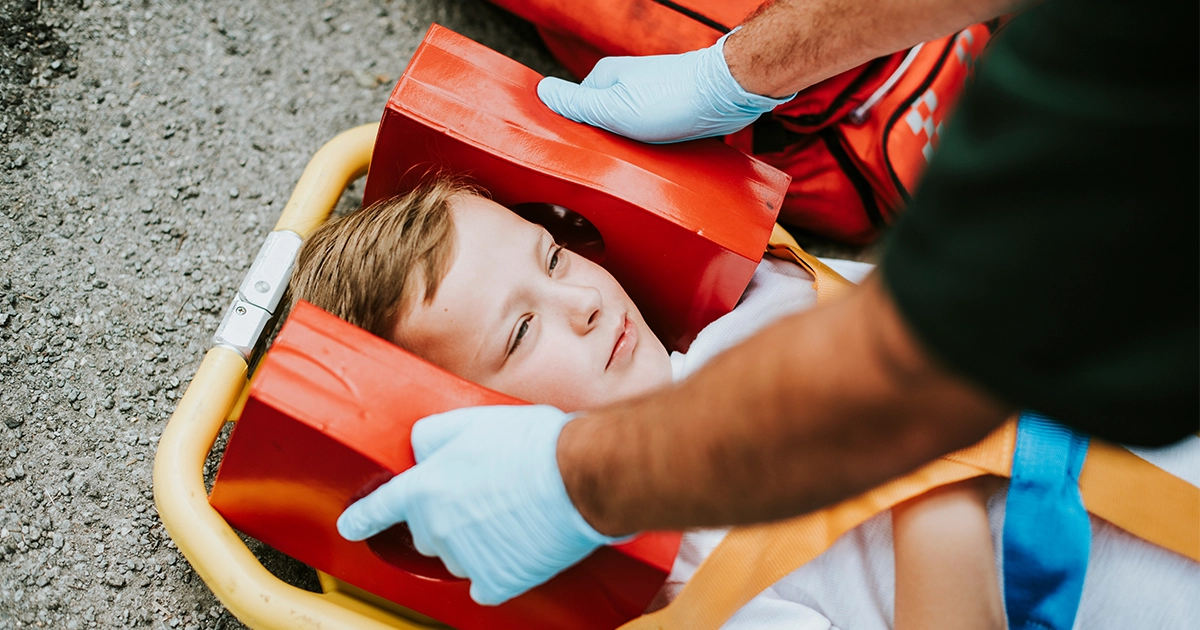
Pediatric calls can create anxiety for EMS clinicians, not because providers don’t care, but because they often don’t get enough meaningful exposure in training. When pediatric education is treated as a separate, limited topic instead of a natural part of emergency care, students may enter the field believing these patients require an entirely different approach.
For Jimmy Apple, that mindset is part of the problem. Apple, also known as the EMS Avenger, is a 22-year paramedic with experience in 911 response, adult critical care, mobile ECMO, and neonatal and pediatric critical care transport.
The Public Safety Group sat down with Apple to discuss pediatric emergency care and why the way it is framed can make all the difference in student outcomes.
Integrating Pediatric Care into Core EMS Topics
Like many other topics in EMS education, pediatric care is often separated from the rest of the curriculum, rather than combining it with other subjects. Students may spend significant time learning cardiology, respiratory emergencies, trauma, and operations, only to receive a short pediatric section that attempts to cover every pediatric condition at once.
Apple believes this approach makes it harder for clinicians to build true competency. As he explains, folding pediatric emergencies into these broad categories leaves little time for meaningful application and understanding.
"You have to get so many hours in respiratory, so many hours in cardiology, so many hours in trauma and operations,” he said. “So you don't get near the amount of time that you should spend with pediatric respiratory emergencies that you would with generalized respiratory in your CE hours.”
Rather than isolating pediatrics into its own limited slot, Apple argues it should be incorporated throughout adult education, with clear pediatric caveats built into each topic.
“We need to take pediatrics out of it, and it needs to be incorporated into adult education with obvious caveats during that education,” he said. “Let's say you're going through your COPD chapter. You should be talking about obstructive pathologies in kids. If you're talking about CHF, that's usually something you're going to see in adults, but kids suffer from heart failure too.... These aren't things that should be siloed away.”
Course materials can also support this approach by helping instructors connect pediatric considerations to broader EMS topics. The Emergency Pediatric Care Course Manual, for example, gives students a focused pediatric reference while reinforcing how pediatric assessment and care fit into the larger emergency care framework.
Clinician Confidence Comes from Repetition in Training
Many EMS practitioners are comfortable admitting when they need more practice in areas like cardiology, pharmacology, or airway management. They seek out books, courses, and other resources because they know those topics matter. Apple said pediatrics should be treated the same way.
“The way to confront that [discomfort] is simply to educate yourself like you would on anything else that you're deficient in,” he said. “You just need to train for it like you would train with any other specific aspect of medicine.”
For educators, that means pediatric training should not be reduced to an annual requirement or a brief lecture that students hope to get through quickly. Pediatric scenarios should be revisited often enough that students can practice assessments, decision-making, equipment use, and communication under realistic conditions. The more familiar these calls feel in training, the less intimidating they become in the field.
Apple also pushes back on the idea that pediatric care is fundamentally separate from adult care.
“The care for them [children], with very few exceptions, is the same as it is for adults,” he said. “We have terrified providers in every aspect of our pediatric education by scaring them with terms like ‘kids are not little adults’ and its evil twin, ‘kids just suddenly crash.’ That phrase does not do anything to help the provider because they aren't educated enough to do anything with it.”
Including Subject Matter Experts
Not every EMS instructor will have deep pediatric or neonatal experience. EMS educators are often expected to teach across a wide range of subjects, many of which they may not have received strong training in themselves.
Bringing in subject matter experts can be valuable in these situations. Just as an instructor might invite an OB specialist to speak about eclamptic emergencies or postpartum complications, Apple suggests that educators bring in pediatric critical care clinicians, pediatric emergency physicians, or other experienced clinicians to strengthen pediatric education.
“You can't be a master of everything, obviously,” he said. “And these instructors were also paramedics who didn't get competent pediatric education or competent geriatric education or competent education in OBG....Having a subject matter expert speak to these things is incredibly important.”
Pediatric Training Should Include Parents, Communication, and De-escalation
Pediatric calls often include an added layer of complexity: the family. A parent may naturally be scared, protective, skeptical, or confrontational, and that can make an already stressful scene feel even more difficult for students. Clinicians are not only treating the child; they are also managing the parent or caregiver’s fear, concern, and need to understand what is happening. Apple said that struggles in these situations point to a larger gap in EMS education.
“We don't have a lot of training in de-escalation,” he said. “And we don't have a lot of training in communication and diplomacy.”
When the patient’s condition allows, Apple recommends starting by speaking with the parent and establishing trust immediately.
“There is an art to getting a parent on your side,” he said. “And the art to that is communicating with them right off the bat.”
He offered one example of what that can sound like on scene:
“My name is Jimmy. I'm a paramedic. I am here to take care of your child and help them get them back to where you want to be and with your cooperation....I will communicate with you this whole time. But I do need a certain amount of trust here as far as some things that need to be done in the moment.”
Sometimes, though, a situation can get off on the wrong foot from the start. Working effectively with family members is critical, so it's important to take a moment to course correct. Apple said one of the most powerful tools a clinician can use is an apology.
“It doesn't matter if you were wrong. It's simply an act of diplomacy,” he said. “’Hey, I'm sorry for how this got to where it is. I just want to apologize. And obviously, I have your kids' best interest in this moment at heart. Can we start over, please?’”
Practicing with Pediatric Equipment, Assessments, Procedures, and Scenarios
Realistic pediatric training should go beyond talking through what might happen on a call. Students benefit from hands-on practice with pediatric equipment, pediatric-sized patients, and scenarios that include both clinical and communication challenges.
Apple said he has seen children brought into training settings so students can practice taking vitals and interacting with pediatric patients in a low-stress environment. While he does not recommend simulating painful procedures on children, he does support opportunities that help students become more comfortable with pediatric presentations. After the simulations, when it comes to providing patient care at the scene, Apple cautions clinicians not to avoid necessary interventions simply because they may cause discomfort. IVs, nasal cannulas, and other procedures may be uncomfortable, but avoiding appropriate care can cause greater harm. In Apple’s experience, children are often more capable of tolerating care than providers assume.
“Most kids do well with discomfort and painful procedures,” he said. “Most kids that you can communicate with will tolerate an IV. Most kids will tolerate a nasal cannula once it's been applied. There are very, very few kids, way fewer than you actually think, that simply cannot be managed appropriately in the way that you want.”
That same realism should extend to how providers speak with children. Apple advises clinicians not to force an overly playful tone if it does not come naturally. Children can recognize when adults are being inauthentic, and they often respond better to direct, respectful communication.
“Don't use kiddie voices or get cute if you're really not comfortable talking like that,” Apple said. “The kids respect you speaking to them straight up like you would with an adult, as long as they can understand what you're saying. And they can smell when you're faking it.”
Pediatric Calls Don’t Have to Feel Unfamiliar
Pediatric emergencies may not make up the majority of EMS calls, but that does not mean they should remain intimidating or underdeveloped in training. By integrating pediatric considerations throughout EMS education and preparing students for the communication realities of pediatric scenes, educators can help future clinicians approach these calls with more confidence.
Apple says the right preparation can also make difficult calls feel more manageable, even when the outcome is not what providers hoped for.
“There is such a rewarding feeling in knowing what to do.”
Emergency Care and Transportation of the Sick and Injured, Thirteenth Edition:
Since 1971, Emergency Care and Transportation of the Sick and Injured has advanced how EMS education is delivered to help train exceptional EMS professionals around the globe. The Thirteenth Edition includes expanded pediatric content that has been seamlessly integrated throughout training materials.
Instructors: Request More Information